
Be More Marmite
I love Marmite, and not just for breakfast.
It's an absolute masterclass in positioning.
So much so that - if you're British at least - calling something 'a bit marmite' has become cultural shorthand for polarising. A brand so clear about who it's for and who it isn't that it's entered the lexicon.
It can't have been an easy sell when the idea was first put in front of the client. Moving away from warm, fuzzy and nostalgic 'the growing up spread you never grow out of', to a positioning that had the actual word 'hate' in it was a pretty ballsy move, but it paid off in a way that most positionings can only dream of. Launched in 1996, the tagline is now thirty years old and they haven't had to change a word of it. Marmite fans love it and lean in hard, championing the squat pot and its salty, gloopy contents. And those who hate it? They do some of that marketing work too, keeping the brand in the conversation. Genius.
Your agency positioning needs the same energy. And most don't have it.
Well this is awkward…
According to the latest “What Clients Think” report by consultancy ‘Up To The Light’ based on over 750 client interviews, only 8% of clients can accurately recall their agency's positioning. Eight percent. And 74% say the agency 'point of difference' usually lacks client relevance and value.
Only 8% of clients can accurately recall their agency's positioning.
Go and look at your website homepage right now. Does it say something like 'we work with clients big and small across multiple sectors'? Or some variation of 'strategic, creative, results-driven'? does it include ‘Full service’? or ‘our people are our difference’? Does it sound like it could belong to approximately six hundred other agencies? That's not positioning, it’s wallpaper. It might be true, it might be liked but it will never be loved. You'll never have passionate advocates, never have clients who seek you out specifically because of you, never have the referrals that come from someone saying 'you need to talk to these people, they're exactly right for you.'
No one evangelises about bland.
Why agencies do it anyway
If you run an agency, especially a small or mid-sized one, the idea of deliberately narrowing your appeal feels counterintuitive at best and commercially reckless at worst. There’s always that voice in the room saying, “yes, but what if we rule ourselves out of something?”
So the positioning stretches. It accommodates. It becomes more inclusive, more flexible, more… everything. Until it’s so broad it stops being useful. What’s interesting is that this is rarely framed as fear. It’s dressed up as ambition, or pragmatism, or keeping options open. But if you strip it back, that’s what it is. A reluctance to say no to the wrong things, in case they turn out to be right.
The problem is that in trying to keep every door open, you make it much harder for the right people to recognise that you’re actually for them.
It can feel worryingly risky to deliberately narrow your appeal when you're trying to grow a business and every new enquiry feels precious. But by trying to appeal to everyone, you end up sanding off all your sharp edges. You become nice (a word my old english teacher Mr Bishop banned us from using, calling it insipid and unimaginative. He was right.) You become the agency equivalent of a firm handshake and a reliable email response time. Competent. Forgettable.
The jack of all trades positioning doesn't make you sound big and capable. It makes you sound like you haven't made any decisions yet.
Positioning is strategy
This is why it matters. Positioning isn't a tagline exercise, and it isn't a rebrand project you commission every five years and then largely ignore.
Positioning is strategy.
David Ogilvy said the essence of strategy is sacrifice. Al Ries, in Positioning: The Battle for Your Mind, said the same thing about positioning specifically. Both of them were pointing at the same annoying truth. You can’t be everything to everyone, and attempting it costs you dearly.
“The essence of strategy is sacrifice."
David Ogilvy“The essence of positioning is sacrifice”
Al Ries, Positioning: The Battle for Your Mind
At its core, positioning is the articulation of your particular set of special skills and expertise, who you're for (and just as importantly, who you’re not for) and how you create value for them. That's it. Specific. Clear. Immediately useful to the right person, and immediately not for the wrong one. That second part isn't a failure, it's part of the point. You shouldn’t want to attract the clients that aren’t right for you.
Strong, clear positioning does enormous heavy lifting for you in new business. It lets clients self-identify. It means the people who find you already believe you're relevant before you've said a word. It means your outreach, your content, your case studies all pull in the same direction. It drives pipeline quality, conversion, pricing power. It’s the set of decisions that make your business make sense to the right people and you spend less time trying to be all things to all people, and more time leaning into the situations where you’re actually at your best.
Back to Marmite
The insight behind Marmite's positioning - that people have a visceral, personal, almost identity-level relationship with the stuff - was always true. It's true now, and it'll be true in another thirty years. That's what a positioning built on genuine truth looks like: it doesn't date, it doesn't need refreshing every time there's a new CMO, it just keeps working.
And the brilliance of the polarisation is that it's non-judgemental. It doesn't shame the haters or dismiss them, it just acknowledges that they exist and gets on with serving the lovers. The people who are right for you will really be right for you. That's infinitely more valuable than a lukewarm maybe from a hundred people who thought you seemed quite solid.
So, where are you?
Three questions worth sitting with:
Does your website say some version of 'we work with clients big and small across multiple sectors'?
Could your clients describe what you do and who you're for? (If the UTTL data is anything to go by, there's only an 8% chance they can.)
Do you know what you do best and who you're genuinely right for?
If the answer to any of those is uncertain, that's where to start. Not with a rebrand, not with a new website, not with a new tagline, with a clear-eyed decision about what you're for and who you're for, and the willingness to say so out loud.
Fortune favours the bold. Get out there and make like Marmite.
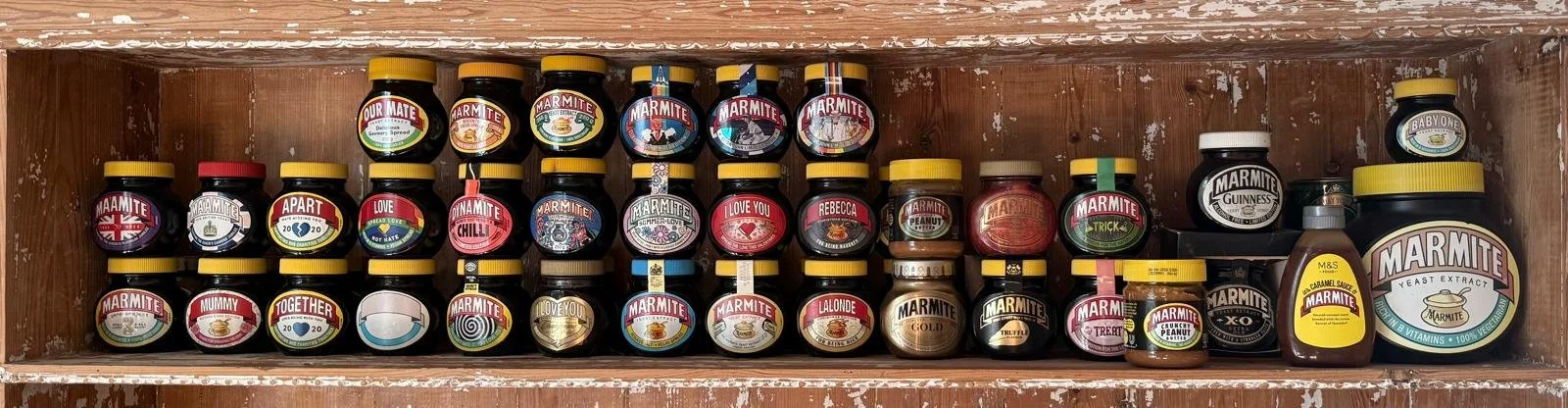
And for the record when I said I love marmite, I meant it!
